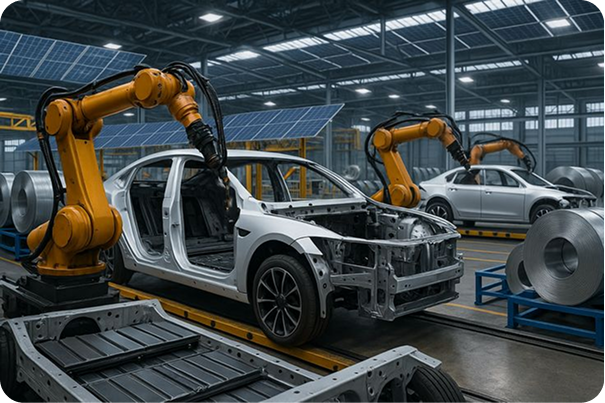
Think about the last time you used GPS, got a warning while driving, or your car helped you park. You didn’t think much about it, right? That’s because it has become normal now.
But behind the scenes, big changes are happening. AI isn’t just improving cars. It’s changing how they’re built, how they drive, and how safe our roads can be.
In this blog, we’ll break down how AI is used in the automotive industry in a simple, clear way no jargon, no hype.
Why Is AI Suddenly Everywhere in Automotive?
For a long time, people in the automotive industry had big ideas. Cars that understood (nominalization) the road, predict problems early, and adjust to how a person drives.
The ideas were always there. But the technology wasn’t ready.
Now, that has changed. The systems, data, and computing power have finally caught up with those ideas.
Three things converged to make artificial intelligence in automotive viable at scale:
01. Affordable, Powerful Sensors
02. Massive Training Datasets
03. Edge Computing Power
“AI in cars is not a test anymore. It is already being used in real vehicles. It helps |
improve safety and reduce costs. Now the question is not “will it happen?” — it is “how fast will it grow, and who will miss out?”
ADAS: The AI Your Car Already Has
Advanced Driver Assistance Systems is the most common place where AI is used in cars today. Many drivers use it daily without noticing. These features help avoid accidents, keep the car in lane, and make driving easier. They are already used in millions of cars.
Automatic Emergency Braking (AEB)
The car watches the road ahead. If it sees a crash coming and the driver doesn’t react, it brakes on its own. This helps reduce accidents and saves lives.
Lane Keeping Assist & Lane Centering
The system checks lane lines and warns if the car moves out. Some cars also adjust the steering slightly to stay in the lane. This helps a lot during long drives.
Adaptive Cruise Control
The car keeps a safe distance from the vehicle in front. It slows down and speeds up based on traffic. This makes driving in traffic much easier.
Blind Spot Detection & Cross-Traffic Alert
Sensors check areas you can’t see. They warn you if another vehicle is nearby, especially while changing lanes or reversing.
AI-Powered Parking Assistance
The car finds parking space and helps with steering. In some cars, it can park by itself while the driver just controls speed.

Autonomous Vehicles: What the Levels Actually Mean
The road to fully self-driving cars is a spectrum, not a switch. Understanding the SAE levels helps separate hype from reality.
| SAE Level | Name | Who Drives? |
|---|---|---|
| Level 0 | No Automation | Human only |
| Level 1 | Driver Assistance | Human + 1 assist |
| Level 2 | Partial Automation | Human must monitor |
| Level 3 | Conditional Automation | System drives, human on standby |
| Level 4 | High Automation | System drives in defined areas |
| Level 5 | Full Automation | No human needed, ever |
AI Applications for the Automotive Industry
A comprehensive look at where artificial intelligence is actively deployed across the automotive value chain.
Generative Design
AI generates thousands of structural design variations, optimizing simultaneously for weight, strength, aerodynamics, and cost.
Crash Simulation AI
Machine learning models can predict crash results using design data itself. So instead of building and destroying real cars, tests can be done faster on systems, saving time and cost.
Supply Chain Optimization
AI predicts demand, tracks supplier risk, and manages inventory and logistics in real time. Companies using it handled the semiconductor shortage much better.
Personalized In-Car AI
Modern cars learn your preferences like seat, AC, routes, and music, and adjust automatically. Voice assistants let you control things without taking your hands off the wheel.
Predictive Vehicle Health
AI in cars tracks engine, battery, brakes, and tires in real time. Instead of waiting for a failure, it alerts you early when something needs service.
AI-Powered Car Configurator
Dealership and OEM sites use AI to show real-time custom car previews, suggest finance plans, and recommend the right variant based on your needs.
Fleet Management Intelligence
AI tracks fleet vehicles in real time, improves routes, monitors drivers, and plans maintenance. It often helps save around 10–20% on fuel.
Cybersecurity AI
As cars get more connected, hacking risks increase. AI security systems watch network activity and flag anything unusual that could be an attack.
Usage-Based Insurance
Insurers use AI to track driving habits like speed, braking, and turns, and set premiums based on that. Safe drivers pay less, risky drivers pay more.
Working on an AI Automotive Project?
At TwinArcus, we help automotive businesses identify where AI creates the most value, whether that’s on the production floor, in the supply chain, or in the customer experience. If you’re exploring AI implementation in automotive and want a clear-eyed view of where to start, let’s talk.
Getting AI Implementation Right in Automotive
AI is already available — the real difference is how well it’s used. Many companies rush into advanced features without fixing the basics like clean data, clear goals, and proper internal processes. Without this foundation, even the best AI tools won’t deliver real value.
The companies that get it right usually start with a clear, measurable problem, assign proper ownership, and track real business outcomes like quality, downtime, or customer satisfaction. It may not sound exciting, but this is what makes AI actually work in the real world.
Ready to Drive the Future of Automotive?
Implementing AI in your vehicles and operations doesn’t have to be complex or costly. Even small steps can make a big difference in safety, efficiency, and customer experience.
If you’re ready to take that step, now is the time to start and stay ahead in the rapidly evolving automotive industry.