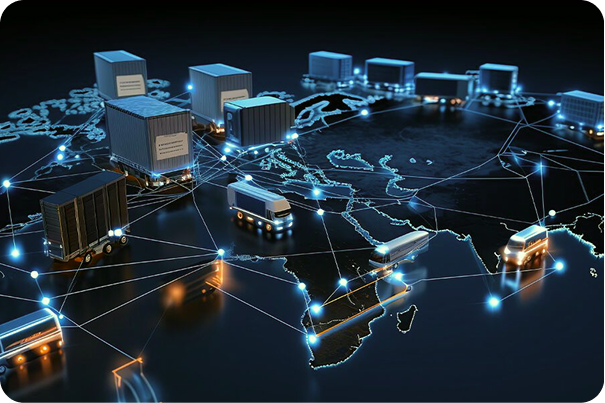
If you walk into most logistics or supply chain companies today, you will immediately notice that everything already runs on software. TMS tools, GPS tracking, Warehose management platforms and some more.
But if you sit with the operations team for a few hours, the reality becomes clearer. The systems record everything, but the thinking still happens manually.
Today’s Reality
Systems Record → Humans Decide.
AI-Augmented Future
Systems Record → AI Recommends → Humans Confirm.
How AI Adds Intelligence to Existing Systems
AI doesn’t rip and replace your current stack. It connects on top — turning stored data into forward-looking decisions.
01. Data Collection & Integration
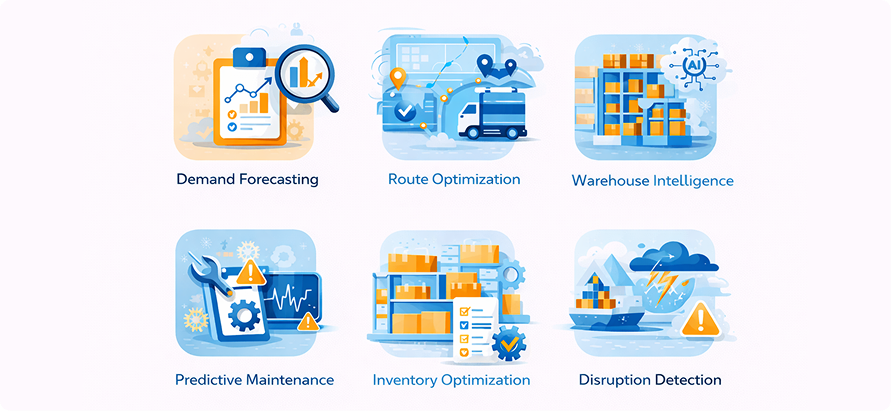
6 Areas Where AI Makes the Biggest Impact
Demand Forecasting
Monitors signals such as weather disruptions, port congestion, or supplier delays and alerts teams early.
From Reactive Operations to Predictive Operations
Reactive Mode
- Warehouse runs out → emergency reorder
- Vehicle breaks down → scramble rerouting
- Shipment delayed → customer complaints
- Based only on current information
- High cost, low reliability
- AI flags stock issue 3 weeks before it happens
- Sensor data predicts maintenance window in advance
- Delays anticipated — rerouting happens proactively
- Based on pattern analysis + real-time data
- Lower cost, higher reliability
How Companies Actually Implement AI in Logistics
Integrate ERP, WMS, TMS, and tracking systems so operational data flows together for the first time.
Analyze Patterns
Build & Validate Models
The Next Stage Is Intelligence
Companies that combine logistics expertise with AI-driven insights will be able to operate more efficiently, respond faster to disruptions, and deliver better service to customers.